SSL/TLS Analysis
Review HTTPS availability, TLS certificate information and important encryption-related configuration.

Check your website security configuration with ROSVIX, including HTTPS, SSL/TLS certificates, security headers and common externally visible security issues.
ROSVIX helps identify security configuration weaknesses and presents the findings in a clear website security assessment.
Review HTTPS availability, TLS certificate information and important encryption-related configuration.
Check important HTTP security headers including HSTS, Content Security Policy and other browser security controls.
Identify common website security configuration issues and technical weaknesses visible from the public web interface.
Review security-related configuration against widely used web security best practices.
Public websites continuously expose services to browsers, search engines and internet users. Incorrect TLS or HTTP security configuration can unnecessarily increase risk.
ROSVIX provides an external website security assessment that helps identify configuration issues and gives website owners clear recommendations for improvement.
ROSVIX analyzes externally observable website security configuration such as HTTPS, TLS certificates, HTTP security headers and related web security best practices.
Yes. The website security assessment includes SSL/TLS certificate and HTTPS-related checks.
Security headers are HTTP response headers that instruct browsers to apply additional security controls. Examples include HSTS and Content Security Policy.
Run a ROSVIX website scan and receive clear findings and actionable recommendations.
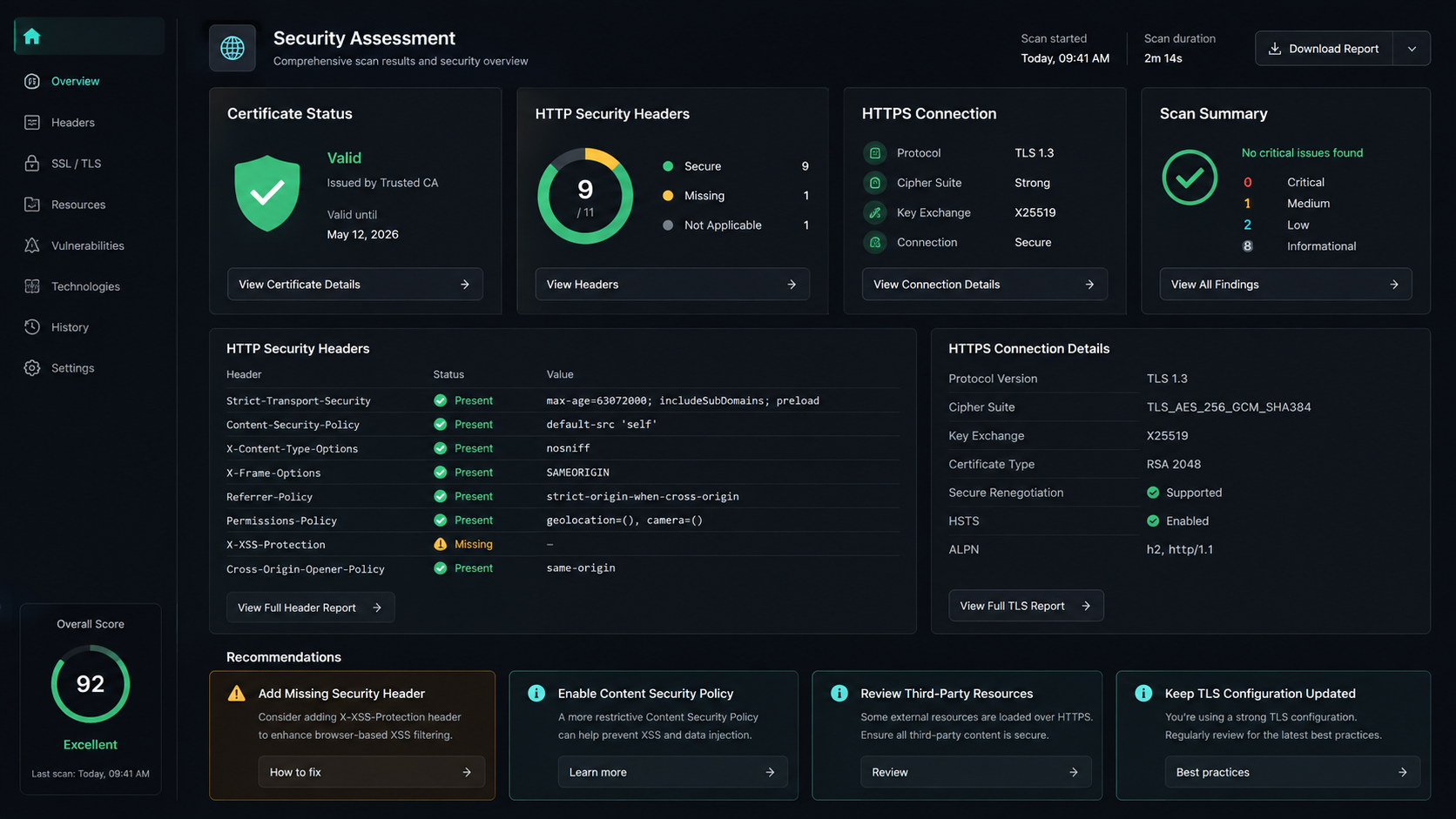
A public security review helps identify browser-facing configuration gaps before they become routine risks. It is a useful starting point for HTTPS, certificate delivery and HTTP security controls.
Review HTTPS availability, certificate information, HSTS, Content-Security-Policy, referrer controls and other security headers that affect how browsers handle a public website.
Confirm the finding in the live HTTP response, identify the application or proxy responsible for the setting, test a change carefully and confirm that legitimate website functions still work.
Public checks cannot establish that a website is free from vulnerabilities. They do not test authenticated functions, source code, cloud permissions, server patching or internal network security.